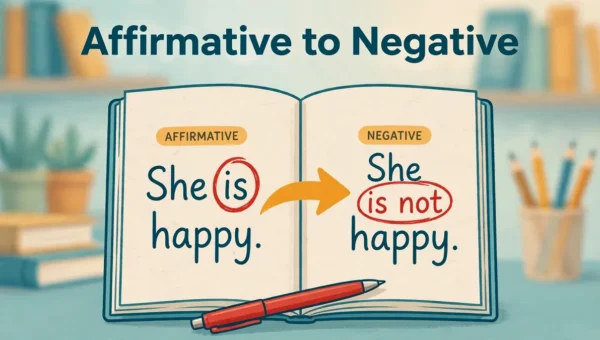
Affirmative to Negative করার নিয়ম: SSC ইংরেজি ২য় পত্র সম্পূর্ণ গাইড
Affirmative sentence-কে negative করার মূল নিয়ম হলো বাক্যের অর্থ অপরিবর্তিত রেখে গঠন বদলে দেওয়া — শুধু not বসিয়ে দিলেই হয় না। যেমন “He is honest”-এর সঠিক negative রূপ “He is not dishonest”, “He is not honest” নয়। এই গাইডে affirmative to negative-এর ১২টি নিয়ম উদাহরণসহ, বোর্ড প্রশ্নের প্যাটার্ন ও ৭টি সাধারণ ভুলের বিশ্লেষণ দেওয়া হলো।
ইংরেজি ২য় পত্রের খাতা দেখতে গিয়ে একটা দৃশ্য আমি বারবার দেখেছি। Changing sentence অংশে দশটা বাক্যের মধ্যে আটটাতেই শিক্ষার্থী শুধু not ঢুকিয়ে দিয়েছে — “She is honest” হয়ে গেছে “She is not honest”। ব্যাকরণের দিক থেকে বাক্যটা ভুল নয়, কিন্তু transformation-এর শর্ত ভাঙা হয়েছে। শর্তটা কী? বাক্যের গঠন বদলাবে, অর্থ বদলাবে না।
এই একটা লাইন বুঝে ফেললেই affirmative to negative তোমার কাছে সহজ হয়ে যাবে। নিচে প্রতিটি নিয়মের পাশে দিলাম পরীক্ষায় যেভাবে প্রশ্ন আসে তার ধরন, নিজের করা ভুল শুধরে নেওয়ার উপায়, আর শেষে একটা প্র্যাকটিস সেট — উত্তরসহ।
Affirmative ও Negative Sentence বলতে আসলে কী বোঝায়?
Affirmative sentence হলো ইতিবাচক বক্তব্যের বাক্য — যেখানে কোনো তথ্য বা মতামত সরাসরিভাবে প্রকাশ করা হয়, যেমন “Everybody loves flowers”। Negative sentence হলো নেতিবাচক বক্তব্যের বাক্য — not, never, nobody, nothing, no-জাতীয় শব্দ দিয়ে গঠিত, যেমন “Nobody dislikes flowers”। দুটোর অর্থ একই থাকতে পারে, গঠন আলাদা — transformation-এর খেলাটা ঠিক এখানেই।
একটা ব্যাপার পরিষ্কার করে নিই। Negative sentence মানেই “না-বোধক” কথা নয়। “Nobody dislikes flowers” বাক্যটা গঠনে negative, কিন্তু অর্থে ইতিবাচক — সবাই ফুল ভালোবাসে। পরীক্ষক এই অর্থের মিলটাই যাচাই করেন।
| ধরন | বৈশিষ্ট্য | উদাহরণ |
|---|---|---|
| Affirmative | ইতিবাচক গঠন, সরাসরি বক্তব্য | He is honest. |
| Negative | not/never/nobody/no-জাতীয় শব্দ থাকে | He is not dishonest. |
| ভুল Negative | অর্থ বদলে গেছে (transformation হয়নি) | He is not honest. ✗ |
তৃতীয় সারিটা লক্ষ করো। “He is not honest” ব্যাকরণগতভাবে শুদ্ধ বাক্য — কিন্তু এটা transformation নয়, কারণ মূল বাক্যের অর্থ (“সে সৎ”) পাল্টে গেছে (“সে সৎ নয়”)। পরীক্ষায় এই জায়গাতেই সবচেয়ে বেশি নম্বর কাটা যায়।
কেন শুধু “not” বসিয়ে দিলে নম্বর কাটা যায়?
শুধু not বসালে বেশিরভাগ ক্ষেত্রে বাক্যের অর্থ উল্টে যায়, আর transformation-এর প্রথম শর্তই হলো অর্থ অপরিবর্তিত রাখা। তাই “He is honest”-কে “He is not honest” না লিখে বিপরীতার্থক শব্দ দিয়ে “He is not dishonest” লিখতে হয় — গঠন বদলেছে, অর্থ একই আছে।
আমি গত কয়েক বছরের বোর্ড প্রশ্ন ঘেঁটে দেখেছি — changing sentence অংশে নির্দেশনা থাকে “Change the sentences according to directions”। প্রতিটা বাক্যের পাশে বন্ধনীতে লেখা থাকে কী করতে হবে: (Negative), (Complex), (Passive)। অর্থাৎ পরীক্ষক আগেই বলে দিচ্ছেন কোন গঠনে নিতে হবে; তোমার কাজ শুধু নিয়ম মেনে রূপান্তর করা।
এই অংশে ভালো করার সহজ কৌশল একটাই — প্রতিটি নিয়মের “ট্রিগার শব্দ” চিনে রাখা। বাক্যে only দেখলেই মাথায় আসবে none but; must দেখলেই cannot but। নিচের ১২টা নিয়ম ঠিক এই ট্রিগার-ভিত্তিকভাবেই সাজানো। নিয়ম মুখস্থ না করে বুঝে পড়ার এই অভ্যাসটা অন্য বিষয়েও কাজে লাগে — এইচএসসি আইসিটির সংখ্যা পদ্ধতি অধ্যায়েও প্রতিটি রূপান্তরের পেছনে নির্দিষ্ট যুক্তি আছে, মুখস্থ বিদ্যা নয়।
Affirmative to Negative করার ১২টি নিয়ম (উদাহরণসহ)
প্রতিটি নিয়মের নিচে দিলাম গঠন, দুটো করে উদাহরণ, আর পরীক্ষার হলে মনে রাখার ছোট্ট টিপস। উদাহরণগুলো নিজে খাতায় লিখে প্র্যাকটিস করো — চোখে পড়া আর হাতে লেখার মধ্যে পার্থক্য অনেক।
নিয়ম ১: Only বা alone থাকলে → none but / nothing but / not more than
বাক্যের শুরুতে বা মাঝে only/alone দেখলে বুঝবে এই নিয়ম। কিন্তু সাবধান — ব্যক্তি, বস্তু আর সংখ্যা/বয়স — তিন ক্ষেত্রে তিন রকম রূপ হয়।
- ব্যক্তির ক্ষেত্রে: only → none but
Affirmative: Only he can solve the problem.
Negative: None but he can solve the problem. - বস্তুর ক্ষেত্রে: only → nothing but
Affirmative: He has only a pen.
Negative: He has nothing but a pen. - সংখ্যা বা বয়সের ক্ষেত্রে: only → not more than
Affirmative: He is only ten.
Negative: He is not more than ten.
পরীক্ষার টিপস: বোর্ডে এই নিয়ম থেকে প্রায় প্রতি বছরই একটা প্রশ্ন আসে। ভুলটা হয় “He is only ten”-কে “None but ten” লিখে ফেলায় — সংখ্যা দেখলেই not more than, এটা আঙুলে গুনে মনে রাখো।
নিয়ম ২: Must বা have to থাকলে → cannot but / cannot help + verb-ing
Must, have to বা has to যুক্ত বাক্যকে negative করতে cannot but বসে, আর cannot help বসালে পরের verb-এর সাথে ing যোগ করতে হয়। দুটোর অর্থ এক — “না করে পারে না”।
- Affirmative: We must obey our parents.
Negative: We cannot but obey our parents.
অথবা: We cannot help obeying our parents. - Affirmative: She has to work hard.
Negative: She cannot but work hard.
অথবা: She cannot help working hard.
পরীক্ষার টিপস: Cannot help-এর পরে ing ভুলে যাওয়াটা সবচেয়ে কমন ভুল। “Cannot help working” — help-এর পরে verb দেখলেই ing, এটা রিফ্লেক্স বানিয়ে ফেলো।
নিয়ম ৩: Every, everybody, everyone বা all থাকলে → there is no … but
Every দিয়ে শুরু বাক্যে every-এর জায়গায় there is no বসে, তারপর noun-এর singular রূপ, তারপর but। Everybody/everyone-এর বিকল্প সহজ রূপও আছে — nobody দিয়ে বিপরীত verb।
- Affirmative: Every mother loves her child.
Negative: There is no mother but loves her child. - Affirmative: Everybody likes flowers.
Negative: Nobody dislikes flowers.
অথবা: There is nobody but likes flowers.
পরীক্ষার টিপস: “There is no mother but loves” — but-এর পরে verb-এর সাথে s/es থাকে, এটা অনেকেই ভুলে যায়। মনে রাখো, but এখানে “who does not”-এর মতো কাজ করে না, বরং বাক্যের গঠন অপরিবর্তিত রাখে।
নিয়ম ৪: Both…and বা and থাকলে → not only…but also
দুটো বিষয় and দিয়ে যুক্ত থাকলে negative রূপে not only…but also বসে। অর্থ একই থাকে — “শুধু এটা নয়, ওটাও”।
- Affirmative: He is rich and honest.
Negative: He is not only rich but also honest. - Affirmative: Both Rina and Mina went there.
Negative: Not only Rina but also Mina went there.
পরীক্ষার টিপস: দ্বিতীয় উদাহরণে লক্ষ করো — not only Rina… হওয়ার পরে verb singular (went) হয়েছে, কারণ but also-এর পরের subject অনুযায়ী verb বসে। এই সূক্ষ্ম জায়গা থেকে নম্বর কাটা যায়।
নিয়ম ৫: Always থাকলে → never + বিপরীত শব্দ
Always-কে never দিয়ে বদলে তারপর adjective বা verb-এর বিপরীত রূপ বসাতে হয়। Sometimes-এর ক্ষেত্রে উল্টোটা — not always।
- Affirmative: He is always punctual.
Negative: He is never late. - Affirmative: She always helps the poor.
Negative: She never fails to help the poor. - Affirmative: He sometimes visits me.
Negative: He does not always visit me.
পরীক্ষার টিপস: “Never late”-এর মতো সরাসরি বিপরীত শব্দ মনে না এলে “never fails to + verb” কৌশলটা নিরাপদ — প্রায় সব বাক্যেই খাটে।
নিয়ম ৬: Too…to থাকলে → so…that + cannot/could not
Too…to গঠনে too-এর জায়গায় so, to-এর জায়গায় that বসে। তারপর subject-টা আবার লিখে cannot (বর্তমান) বা could not (অতীত) দিয়ে বাক্য শেষ করতে হয়।
- Affirmative: He is too weak to walk.
Negative: He is so weak that he cannot walk. - Affirmative: She was too tired to work.
Negative: She was so tired that she could not work.
পরীক্ষার টিপস: That-এর পরে subject (he/she) আবার লেখা বাধ্যতামূলক — “so weak that cannot walk” লিখলে বাক্য অসম্পূর্ণ থেকে যায়। আর tense দেখে cannot না could not, সেটা ঠিক করো: was থাকলে could not।
নিয়ম ৭: As…as থাকলে → not less…than
দুটো জিনিসের তুলনায় as…as থাকলে negative রূপে not less…than বসে। অর্থ দাঁড়ায় “এর চেয়ে কম নয়” — অর্থাৎ সমান বা বেশি।
- Affirmative: He is as tall as his brother.
Negative: He is not less tall than his brother. - Affirmative: Iron is as useful as gold.
Negative: Iron is not less useful than gold.
পরীক্ষার টিপস: এই নিয়মটা বোর্ডে তুলনামূলক কম আসে, কিন্তু এলে বেশিরভাগ শিক্ষার্থী আটকে যায়। As…as দেখলেই “not less…than” — মাত্র একটা লাইন মনে রাখলেই হবে।
নিয়ম ৮: As soon as থাকলে → no sooner had…than
As soon as-এর জায়গায় no sooner had বসে, তারপর subject, তারপর মূল verb-এর past participle (V3) রূপ, বাকি অংশ, এবং মাঝখানের কমার জায়গায় than।
- Affirmative: As soon as he saw me, he ran away.
Negative: No sooner had he seen me than he ran away. - Affirmative: As soon as the thief saw the police, he hid.
Negative: No sooner had the thief seen the police than he hid.
পরীক্ষার টিপস: No sooner had-এর পরে saw নয়, seen — V3 বাধ্যতামূলক। “No sooner had he saw” লিখলে পুরো নম্বরটাই যায়। আর than-এর আগে কমা বসে না।
নিয়ম ৯: Superlative degree থাকলে → no other…as…as
Superlative (biggest, best) যুক্ত বাক্যকে positive degree-তে নিয়ে no other দিয়ে শুরু করতে হয়। গঠন: No other + noun + verb + as + positive form + as + subject।
- Affirmative: Dhaka is the biggest city in Bangladesh.
Negative: No other city in Bangladesh is as big as Dhaka. - Affirmative: He is the best boy in the class.
Negative: No other boy in the class is as good as he.
পরীক্ষার টিপস: Superlative থেকে positive-তে adjective-এর রূপ বদলায় — biggest→big, best→good। এই রূপান্তরটা ভুল হলে বাকিটা ঠিক থাকলেও নম্বর কাটা যায়।
নিয়ম ১০: চিরন্তন সত্য (universal truth) → না-বোধক প্রশ্নবোধক বাক্য
চিরন্তন সত্য — যেমন সূর্য পূর্ব দিকে ওঠে — এগুলোকে negative করতে বাক্যটাকে প্রশ্নবোধক করে not ঢোকাতে হয়। উত্তর “হ্যাঁ” ধরে নেওয়া হয়, তাই অর্থ বদলায় না।
- Affirmative: The sun rises in the east.
Negative: Does the sun not rise in the east? - Affirmative: Knowledge is power.
Negative: Is not knowledge power?
পরীক্ষার টিপস: Auxiliary verb (do/does/is) বাক্যের শুরুতে আসে আর শেষে প্রশ্নবোধক চিহ্ন — দুটোর একটা বাদ গেলেই গঠন ভুল।
নিয়ম ১১: বিপরীতার্থক শব্দ + not
কোনো ট্রিগার শব্দ না থাকলে সবচেয়ে সহজ পথ — adjective বা verb-এর বিপরীত শব্দ বসিয়ে তার আগে not। এটাই transformation-এর মূল চেতনা।
- Affirmative: She is honest.
Negative: She is not dishonest. - Affirmative: I shall remember you.
Negative: I shall not forget you. - Affirmative: He is a good student.
Negative: He is not a bad student.
পরীক্ষার টিপস: এই নিয়মটাই আসলে সবচেয়ে বেশি কাজে লাগে, কারণ বোর্ডের অনেক বাক্যেই কোনো ট্রিগার শব্দ থাকে না। ২০-২৫টা common opposite word (honest–dishonest, remember–forget, brave–coward) আগে থেকে মুখস্থ রাখো।
নিয়ম ১২: Many, a few, much-এর দ্রুত রূপান্তর
এই তিনটা শব্দের negative রূপ নির্দিষ্ট জোড়ায় মনে রাখো — বোর্ডে মাঝেমধ্যে আসে, আর জানা থাকলে দশ সেকেন্ডে উত্তর হয়ে যায়।
- Many → not a few: I have many friends. → I do not have a few friends.
- A few → not many: He has a few books. → He does not have many books.
- Sometimes → not always: (নিয়ম ৫-এ দেখো)
এক নজরে ১২টি নিয়মের রিভিশন চার্ট
পরীক্ষার আগের রাতে পুরো গাইড আবার পড়ার সময় নেই — এই চার্টটা স্ক্রিনশট নিয়ে রাখো। বাম পাশে ট্রিগার শব্দ, ডান পাশে তার negative রূপ।
| ট্রিগার (Affirmative-এ) | রূপান্তর (Negative-এ) | মনে রাখার সূত্র |
|---|---|---|
| only / alone (ব্যক্তি) | none but | Only he → None but he |
| only (বস্তু) | nothing but | only a pen → nothing but a pen |
| only (সংখ্যা/বয়স) | not more than | only ten → not more than ten |
| must / have to | cannot but / cannot help + V-ing | help-এর পরে ing মাস্ট |
| every / everybody / all | there is no … but / nobody + বিপরীত | every mother → there is no mother but |
| both…and / and | not only…but also | দুটোই থাকবে, গঠন বদলাবে |
| always | never + বিপরীত শব্দ | always punctual → never late |
| too…to | so…that + cannot/could not | that-এর পরে subject আবার |
| as…as | not less…than | তুলনা একই থাকে |
| as soon as | no sooner had…than | had-এর পরে V3 |
| superlative | no other…as…as (positive) | biggest → as big as |
| universal truth | না-বোধক প্রশ্ন | Does…not…? |
বোর্ড প্রশ্নে যেভাবে আসে — প্যাটার্ন বিশ্লেষণ
সাম্প্রতিক বোর্ড প্রশ্ন ঘেঁটে দেখা গেছে, changing sentence অংশে ১০টি বাক্য থাকে আর প্রতিটার পাশে বন্ধনীতে নির্দেশনা দেওয়া থাকে — যেমন (Negative), (Complex), (Passive), (Interrogative)। Affirmative to negative থেকে সাধারণত ১-২টা বাক্য আসে, আর প্রশ্নকর্তারা ঘুরেফিরে only, must, too…to আর every — এই চারটা ট্রিগারই বেশি ব্যবহার করেন।
একটা জিনিস খেয়াল করেছি — বোর্ডের বাক্যগুলো প্রায়ই নীতিকথা বা সামাজিক বিষয় নিয়ে হয়। যেমন “Corruption is a great curse” বা “We must obey our parents” ধরনের বাক্য। অর্থাৎ vocabulary কঠিন নয়; লড়াইটা পুরোপুরি নিয়মের।
আরেকটা প্যাটার্ন: একই সেটে affirmative to negative আর negative to affirmative দুটোই থাকতে পারে। Negative to affirmative হলো এই নিয়মগুলোরই উল্টো প্রয়োগ — “None but he can do this” দেখলে বুঝবে এটাকে “Only he can do this” বানাতে হবে। নিয়ম একবার আয়ত্ত করলে দুদিকেই ব্যবহার করা যায়।
প্রশ্নের ধরন বুঝতে NCTB-র অফিসিয়াল সাইট থেকে ইংরেজি ২য় পত্রের পাঠ্যবই মিলিয়ে নিতে পারো — বোর্ড প্রশ্ন পাঠ্যবইয়ের গ্রামার অংশের বাইরে যায় না।
শিক্ষার্থীদের ৭টি সাধারণ ভুল (আর শুধরে নেওয়ার উপায়)
নিয়ম জানার পরেও নম্বর কাটা যায় — কারণ ভুলগুলো নিয়মে নয়, প্রয়োগে। নিচের সাতটা ভুল আমি অসংখ্য খাতায় দেখেছি; প্রতিটার পাশে দিলাম কেন এটা ভুল আর সঠিক রূপটা কী।
- শুধু not বসিয়ে অর্থ বদলে ফেলা: “She is honest” → “She is not honest” ✗। এটা transformation নয়। সঠিক: “She is not dishonest” ✓। প্রশ্ন করার আগে নিজেকে জিজ্ঞেস করো — অর্থ একই আছে তো?
- Cannot help-এর পরে ing না দেওয়া: “We cannot help obey our parents” ✗। Help-এর পরে verb এলে ing বাধ্যতামূলক: “We cannot help obeying our parents” ✓।
- So…that-এর পরে subject বাদ দেওয়া: “He is so weak that cannot walk” ✗ — that-এর পরে কে? Subject লিখতেই হবে: “He is so weak that he cannot walk” ✓।
- No sooner had-এর পরে V3 না বসানো: “No sooner had he saw the police” ✗। Had-এর পরে past participle: “No sooner had he seen the police” ✓।
- Only-এর তিন রূপ গুলিয়ে ফেলা: “He is only ten” → “None but ten” ✗। সংখ্যা/বয়সে none but বসে না — “He is not more than ten” ✓।
- Tense না মিলিয়ে cannot বসানো: “She was too tired to work” → “…that she cannot work” ✗। অতীত tense-এ could not: “…that she could not work” ✓।
- There is no-এর পরে plural noun: “There is no mothers but love” ✗। Every-এর পরে singular: “There is no mother but loves her child” ✓।
এই ভুলগুলো এড়ানোর সবচেয়ে ভালো উপায় — প্রতিটা নিয়ম শেখার সাথে সাথে একটা করে ভুল উদাহরণ নিজে বানিয়ে শুধরে নেওয়া। ভুলটা নিজে করলে মনে থাকে বেশি।
নিজেকে যাচাই করো: ১০টি অনুশীলন প্রশ্ন (উত্তরসহ)
নিচের ১০টা বাক্যকে negative করো। প্রতিটার পাশে নিয়মের নম্বর দেওয়া আছে — আটকে গেলে ওপরে ফিরে গিয়ে সেই নিয়মটা আবার দেখো। উত্তর নিচে দেওয়া, আগে নিজে চেষ্টা করো।
- Only Allah can help us. (নিয়ম ১)
- We must respect our teachers. (নিয়ম ২)
- Everybody wants success in life. (নিয়ম ৩)
- He is both wise and kind. (নিয়ম ৪)
- She is always sincere. (নিয়ম ৫)
- The box is too heavy to carry. (নিয়ম ৬)
- As soon as the rain stopped, we went out. (নিয়ম ৮)
- Burj Khalifa is the tallest building in the world. (নিয়ম ৯)
- The earth moves round the sun. (নিয়ম ১০)
- He is a brave man. (নিয়ম ১১)
উত্তরমালা:
- None but Allah can help us.
- We cannot but respect our teachers. / We cannot help respecting our teachers.
- Nobody dislikes success in life. / There is nobody but wants success in life.
- He is not only wise but also kind.
- She is never insincere.
- The box is so heavy that it cannot be carried. (বস্তু বলে passive রূপও গ্রহণযোগ্য; “that we cannot carry it”-ও ঠিক।)
- No sooner had the rain stopped than we went out.
- No other building in the world is as tall as Burj Khalifa.
- Does the earth not move round the sun?
- He is not a coward.
৮টার বেশি ঠিক হলে বুঝবে নিয়মগুলো তোমার আয়ত্তে এসেছে। ৬টার নিচে হলে রিভিশন চার্টটা আরেকবার দেখে আবার চেষ্টা করো — transformation দক্ষতা একদিনে হয় না, ধারাবাহিক প্র্যাকটিসে হয়।
সচরাচর জিজ্ঞাসিত প্রশ্ন (FAQ)
Affirmative আর negative sentence-এর মূল পার্থক্য কী?
Affirmative sentence ইতিবাচক গঠনে সরাসরি বক্তব্য দেয় (“He is honest”), আর negative sentence-এ not, never, nobody, nothing বা no-জাতীয় শব্দ থাকে (“He is not dishonest”)। দুটোর অর্থ একই হতে পারে — transformation-এর লক্ষ্য অর্থ ঠিক রেখে গঠন বদলানো।
শুধু not বসালেই কি negative sentence হয়?
ব্যাকরণের দিক থেকে হয়, কিন্তু transformation-এর শর্ত পূরণ হয় না। “She is honest”-কে “She is not honest” লিখলে অর্থ উল্টে যায়। সঠিক transformation হলো “She is not dishonest” — গঠন বদলেছে, অর্থ একই আছে। পরীক্ষায় এই পার্থক্যটাই যাচাই করা হয়।
Cannot but আর cannot help-এর মধ্যে পার্থক্য কী?
দুটোর অর্থ এক — “না করে পারে না”। পার্থক্য শুধু গঠনে: cannot but-এর পরে verb-এর base form বসে (“cannot but obey”), আর cannot help-এর পরে verb+ing বসে (“cannot help obeying”)। দুটোই must/have to-এর negative রূপ হিসেবে ব্যবহার করা যায়।
No sooner had-এর পরে কোন verb form বসে?
Past participle বা V3 form — যেমন seen, stopped, gone। “No sooner had he seen the police than he ran away” ঠিক; “No sooner had he saw” ভুল। এটা পরীক্ষায় সবচেয়ে বেশি ভুল হওয়া জায়গাগুলোর একটা।
Too…to থাকলে কি সবসময় so…that ব্যবহার করব?
হ্যাঁ, এটাই standard নিয়ম: too→so, to→that, তারপর subject আবার লিখে cannot (বর্তমান) বা could not (অতীত)। শুধু মনে রাখো — that-এর পরে subject বাদ দেওয়া যাবে না, আর tense অনুযায়ী cannot/could not বাছতে হবে।
বোর্ড পরীক্ষায় এই টপিক থেকে কতটুকু আসে?
Changing sentence অংশে সাধারণত ১০টি বাক্য থাকে, যার মধ্যে affirmative to negative থেকে ১-২টা বাক্য আসে। Only, must, too…to আর every — এই চারটা ট্রিগার থেকে প্রশ্ন আসার সম্ভাবনা সবচেয়ে বেশি। তবে বোর্ডভেদে প্যাটার্ন বদলাতে পারে, তাই সাম্প্রতিক ৩-৪ বছরের প্রশ্ন দেখে নেওয়া বুদ্ধিমানের কাজ।
Universal truth-কে negative করতে প্রশ্নবোধক বাক্য কেন?
কারণ চিরন্তন সত্যকে সরাসরি “not” দিয়ে অস্বীকার করা যায় না — “The sun does not rise in the east” মিথ্যা কথা হয়ে যাবে। প্রশ্ন আকারে “Does the sun not rise in the east?” লিখলে উত্তর “হ্যাঁ, ওঠে” ধরে নেওয়া হয়, ফলে অর্থ অপরিবর্তিত থাকে।
শেষ কথা
Affirmative to negative-এর পুরো খেলাটা একটা বাক্যে: অর্থ ঠিক রেখে গঠন বদলাও। ১২টা নিয়ম মুখস্থ করার চেয়ে প্রতিটা নিয়মের ট্রিগার শব্দ চেনা বেশি জরুরি — only দেখলে none but, must দেখলে cannot but, too…to দেখলে so…that। বাকিটা প্র্যাকটিস।
আগামীকাল থেকে প্রতিদিন ৫টা করে বাক্য নিজে বানিয়ে negative করো — এক সপ্তাহ পরে এই অংশটা তোমার সবচেয়ে সহজ অংশ হয়ে যাবে। আর ইংরেজি ২য় পত্রের অন্যান্য গ্রামার টপিকের মতো পদার্থবিজ্ঞানের গতির সূত্রগুলোও উদাহরণ দিয়ে শিখলে মনে থাকে বেশি — নিয়ম বুঝে পড়ার অভ্যাস সব বিষয়েই কাজে লাগে।
নবম-দশম শ্রেণির আরও নোট চাইলে দেখো রসায়ন ১ম অধ্যায়ের সম্পূর্ণ নোট। পড়াশোনা চালিয়ে যাও — ভালো ফল আসবেই।